

Sexual Health & Pelvic Floor Wellness
A guide from your Pelvic Floor Physical Therapist
Sexual health is more than intercourse—it’s about comfort, pleasure, confidence, communication, and feeling connected to your body. Everyone’s experience is unique, and there is no “normal” timeline or way to experience pleasure.
1. Pleasure is Good for Your Health
Healthy sexual activity can:
Improve pelvic floor muscle coordination
Increase blood flow to the pelvis
Reduce stress and improve sleep
Strengthen intimacy and relationships
Help you better understand your body
Remember: Pain is never something you have to “push through.”
2. Understanding Orgasm
An orgasm is a whole-body response involving the brain, nerves, muscles, blood flow, and emotions. There is no single “correct” way to orgasm.
Many women:
Need direct or indirect clitoral stimulation
Enjoy different types of touch depending on the day
Reach orgasm more easily through masturbation than intercourse
May not orgasm every time—and that’s completely normal
Rather than chasing orgasm, focus on curiosity, comfort, communication, and pleasure.
For evidence-based education about female pleasure and orgasm, I highly recommend OMGYES, which was developed with researchers from Indiana University, the Kinsey Institute, and Yale University using peer-reviewed research on women’s sexual pleasure.
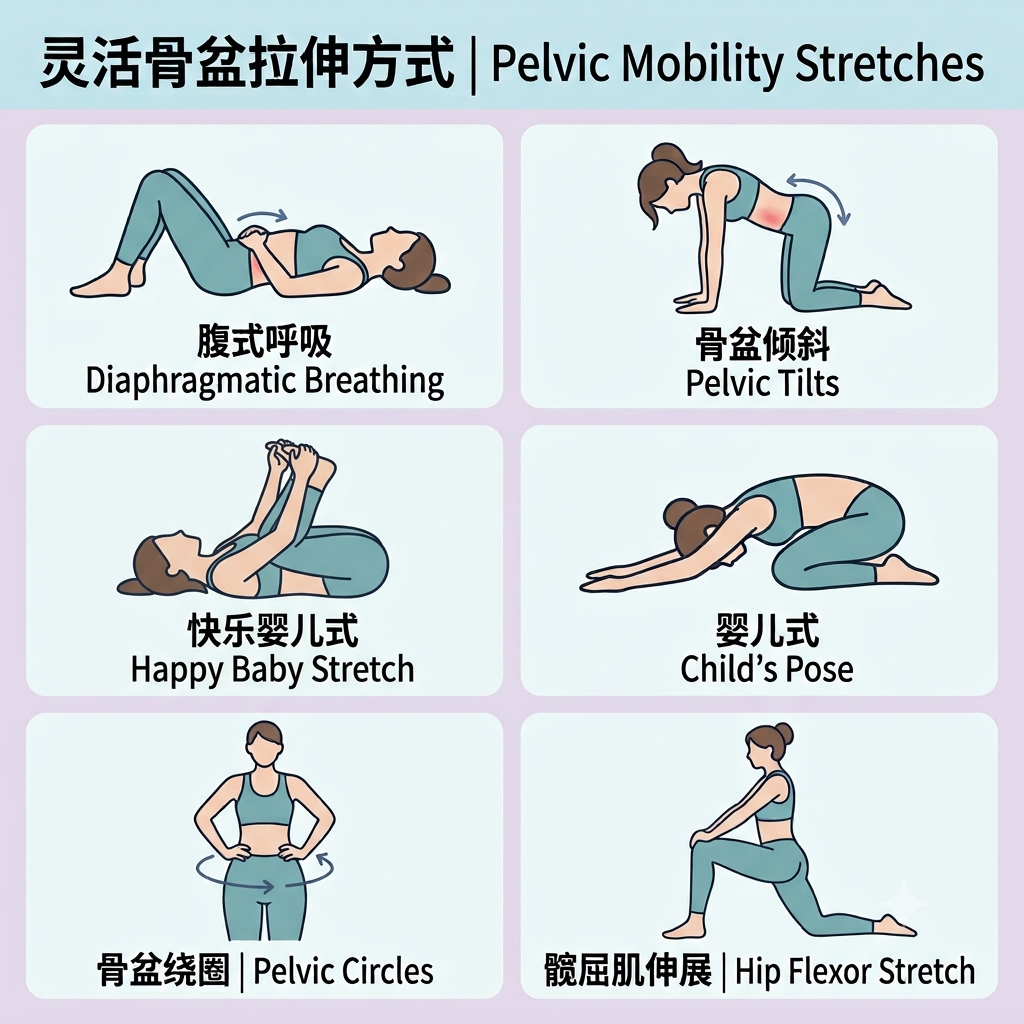
3. Pelvic Mobility Matters
A relaxed, mobile pelvis often feels better than a “strong” but tense pelvis.
Try before intimacy:
Deep diaphragmatic breathing
Pelvic tilts
Happy Baby stretch
Child’s Pose
Hip circles
Gentle adductor and hip flexor stretching
Think of your pelvic floor as a muscle that should contract AND relax.
4. Comfortable Positions
Everyone’s body is different.
If you experience pelvic pain, hip pain, or low back pain, try:
Side-lying (“spooning”)
Woman-on-top (more control over depth and speed)
Supported missionary with pillows under hips or knees
Positions that allow easy communication and movement
Avoid forcing deep penetration if it causes discomfort.
5. Lubrication
Lubrication reduces friction and improves comfort.
Consider lubricant if you:
Are postpartum
Are breastfeeding
Are approaching menopause
Take hormonal contraception
Take antidepressants
Simply prefer extra comfort
Water-based lubricants work well for most people. Silicone lubricants tend to last longer but should not be used with some silicone toys.
6. Healthy Hygiene
✔ Urinate after intercourse if you’re prone to UTIs.
✔ Wash only the outside (vulva) with warm water or a gentle cleanser.
✔ Avoid:
Vaginal douching
Perfumed soaps
Scented wipes
Vaginal deodorants
The vagina cleans itself.
7. Communication is Part of Sexual Health
Your partner cannot feel what you feel.
Try saying:
“A little slower.”
“More pressure.”
“Let’s stay there.”
“Can we change positions?”
Good sex is built on communication, not mind reading.
8. Self-Care & Self-Exploration
Learning your own body can improve confidence and reduce anxiety.
You may explore:
Different types of touch
Different pressure
Different speeds
Breathing during arousal
Relaxing your jaw and shoulders
Pelvic floor relaxation
Curiosity—not performance—is the goal.
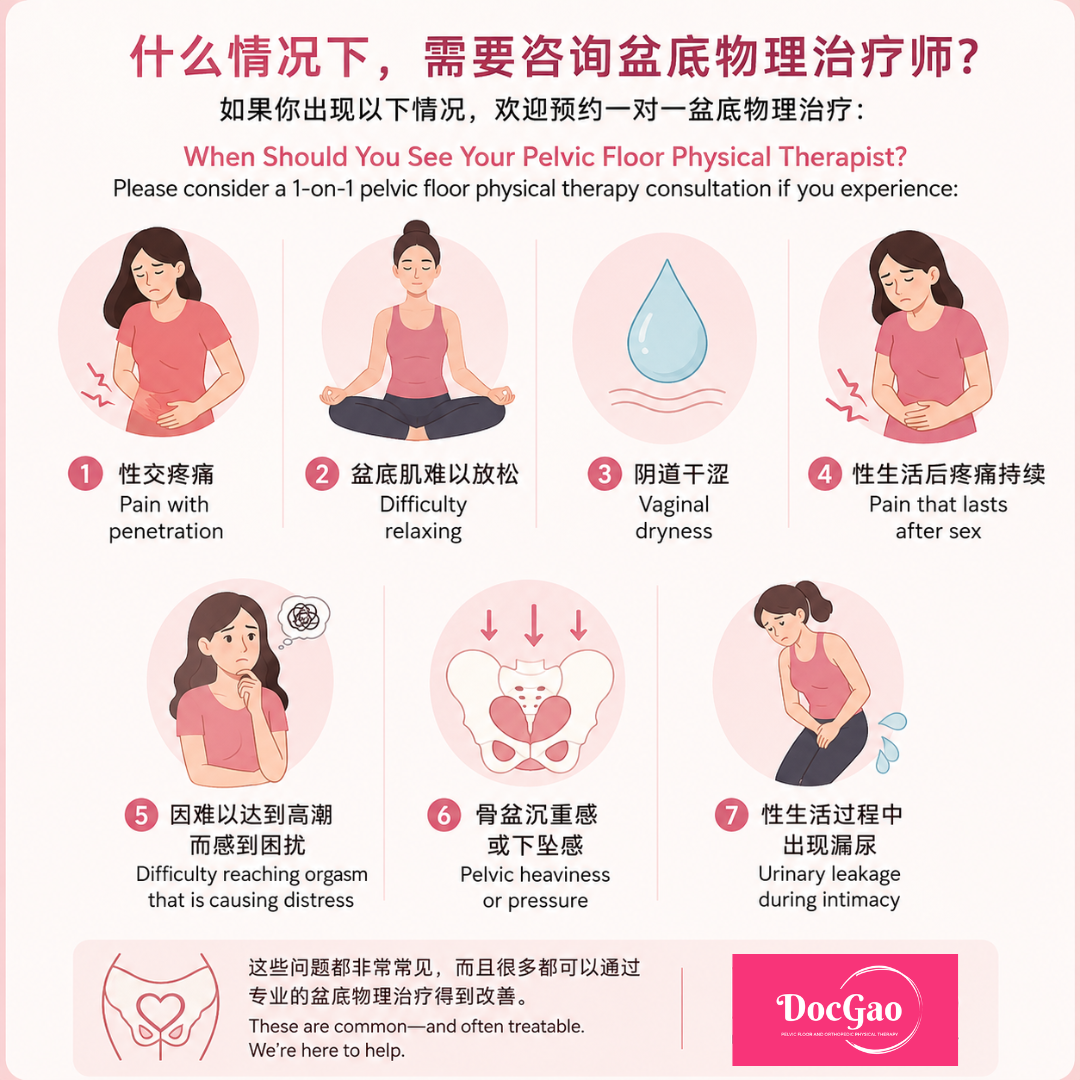
When Should You See Your Pelvic Floor PT?
Please let me know if you experience:
Pain with penetration
Difficulty relaxing
Vaginal dryness
Pain after sex
Difficulty reaching orgasm that is causing distress
Pelvic heaviness or pressure
Urinary leakage during intimacy
These are common—and often treatable.
Remember
Healthy sex should feel safe, comfortable, enjoyable, and respectful of your body’s needs. There is no “perfect” sexual experience—only what feels right for you.