

Pelvic Floor Rehab for Prostatectomy
Common Pelvic Floor Complications following Prostatectomy
Prostate cancer is one of the most common urological malignancies affecting men worldwide, with incidence increasing significantly with age. For localized prostate cancer, radical prostatectomy (RP) is commonly performed as a primary treatment. Although surgery offers effective oncological control, the removal of the prostate, partial disruption of the urethral sphincter, and potential nerve injury often lead to functional complications following surgery.
Urinary incontinence (UI) is the most frequently reported complication, with immediate post-operative incontinence rates reported as high as 60–80%. Many patients continue to require pads one year after surgery. Other types of UI include urgency urinary incontinence and mixed urinary incontinence. Sexual dysfunction and pelvic pain may also significantly affect quality of life [1].
Benefits of Early Intervention of Pelvic Floor Physical Therapy
The American Urological Association (AUA) guidelines clearly recommend that patients undergoing RP initiate pelvic floor muscle training (PFMT) during the early post-operative period to facilitate the recovery of urinary continence. This recommendation is based on moderate-quality evidence (Grade B), recognizing PFMT as a safe, acceptable, and non-invasive intervention with active patient participation [1].
In addition, an increasing number of studies support pre-operative pelvic floor education or training, which has been shown to accelerate post-operative continence recovery. Some guidelines even recommend initiating training several weeks before surgery to reduce the severity of urinary incontinence and enhance patients’ familiarity with exercises, thereby improving long-term adherence after surgery [2].
Advantages of Pelvic Floor Physical Therapy
Compared with unsupervised Kegel exercises performed independently by patients, professional pelvic floor physical therapy offers several distinct advantages:
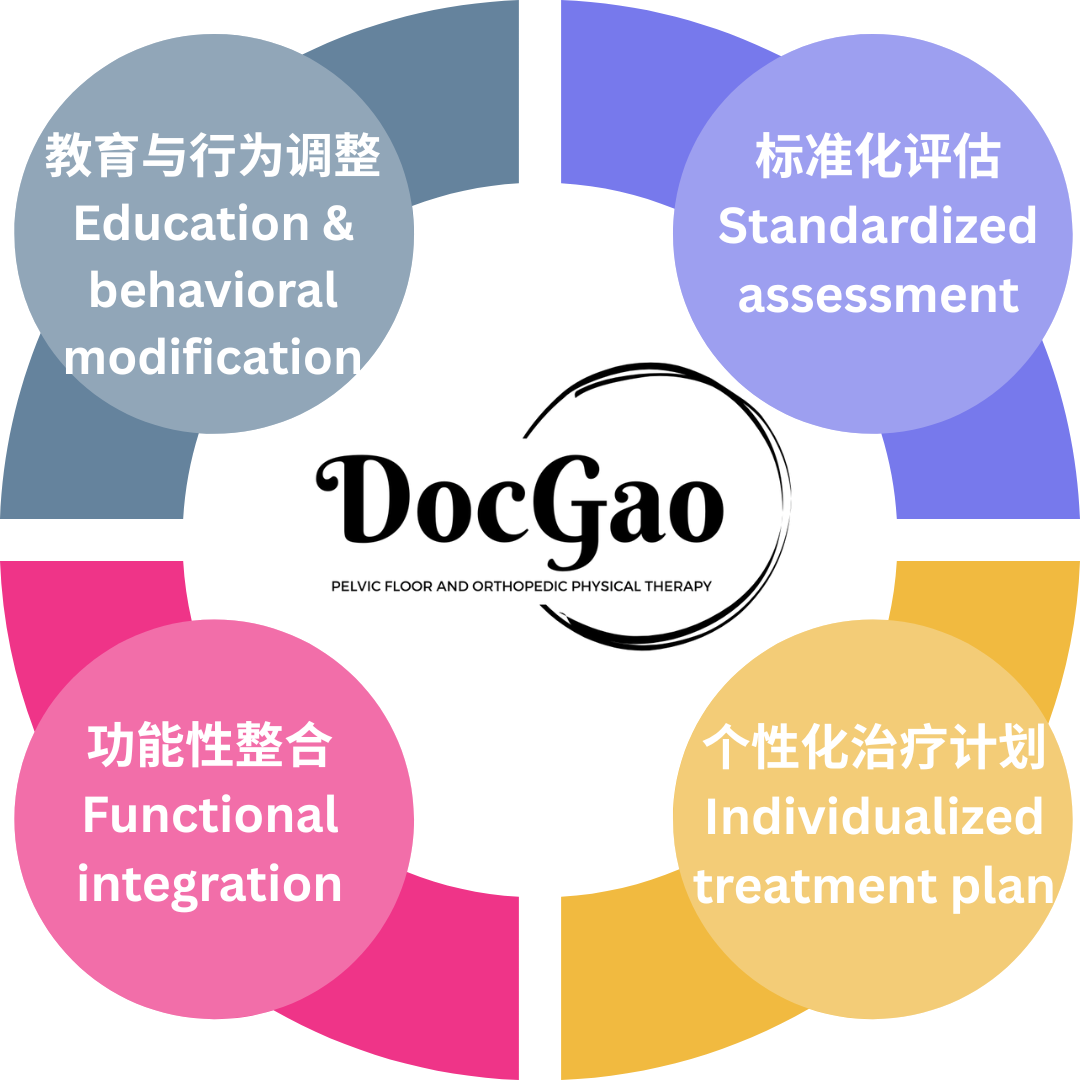
Standardized assessment: Pelvic floor physical therapists assess muscle function using digital palpation, surface electromyography, biofeedback, and ultrasound imaging, rather than relying solely on patient perception [1].
Individualized treatment plan: Targeted exercise programs are developed based on whether pelvic floor muscles are overactive or underactive [3].
Functional integration: Therapy integrates breathing strategies, core muscle activation, and coordination training, rather than simple repetitive contraction‑relaxation.
Education and behavioral modification: Interventions include bladder habits and intra-abdominal pressure control, supporting overall functional recovery.
Effectiveness of Pelvic Floor Physical Therapy for Post-operative UI
Multiple studies have demonstrated that PFMT significantly improves post-prostatectomy urinary incontinence:
In a cohort study of 182 patients following RP, those who participated in standardized pelvic floor rehabilitation (including exercise training, biofeedback, and ultrasound-guided therapy) showed significant improvements in urinary incontinence at 1, 3, and 6 months after catheter removal, reflected by reduced pad weight and pad usage (p < 0.0001). Patients with more severe baseline incontinence experienced even greater improvements, indicating that individuals with severe symptoms can still benefit substantially from PFMT [4].
Another retrospective analysis demonstrated that one-on-one individualized pelvic floor physical therapy (addressing both muscle weakness and overactivity) was significantly more effective than Kegel exercises alone. This approach resulted in reduced pad usage and pelvic pain (p < 0.001), as well as improved muscle strength (p = 0.049) [3].
A systematic review and network meta-analysis concluded that, from a cost-effectiveness perspective, patients with post-prostatectomy urinary incontinence should receive PFMT combined with routine care, professional therapist-guided treatment, biofeedback, and electrical nerve stimulation therapy within the first three months. Beyond three months, ongoing PFMT and routine care remain essential [5].

Individualized Treatment vs. Kegel Exercises Alone
Traditional Kegel exercises emphasize repeated pelvic floor contractions but do not assess whether patients are correctly activating target muscles, nor do they adequately address muscle overactivity or whole-body functional coordination:
Individualized assessment often identifies excessive pelvic floor muscle activity in post-operative patients. In such cases, repeated strengthening alone may reinforce maladaptive patterns and worsen symptoms. These patients require relaxation-focused interventions rather than strengthening alone [3].
Individualized treatment programs incorporating biofeedback and tailored exercise progression address each patient’s specific functional deficits, resulting in more effective reductions in urinary incontinence and pelvic pain [3].
Clinical evidence also shows that professionally supervised training leads to faster recovery of urinary continence compared with unsupervised home-based Kegel exercises, as supported by multiple clinical studies and guideline recommendations [2].
When Should Pelvic Floor Physical Therapy Begin?
Current guidelines and research consistently support early intervention:
Initiating pelvic floor muscle education and training several weeks BEFORE surgery helps establish a foundation for post-operative recovery [2].
Formal pelvic floor physical therapy can begin immediately after catheter removal, with many clinical protocols recommending initiation within the first post-operative week under professional supervision [1].
Both the European Association of Urology (EAU) and the AUA recommend PFMT as a first-line,non-surgical treatment, emphasizing early initiation and individualized program design [1].
What We Offer
Based on current guidelines and clinical evidence, we offer individualized pelvic floor physical therapy program includes the following core components:
Strength and coordination training: Assessment and strengthening of weakened pelvic floor muscles while optimizing timing and coordination of muscle activation.
Breathing and relaxation training: Instruction in diaphragmatic breathing and active relaxation techniques to reduce muscle tension and excessive contraction patterns.
Core muscle synergy: Integration of pelvic floor training with core, hip, and postural musculature to enhance overall intra-abdominal pressure control.
Behavioral education and functional training: Guidance on bladder habits, pressure management strategies, and lifestyle modifications.
Real-time feedback application: Use of ultrasound imaging and palpation to enhance patient awareness and training quality.
Summary Recommendations
Initiating pelvic floor training in the late pre-operative stage improves post‑operative recovery and patient engagement.
Early post-operative pelvic floor physical therapy significantly accelerates the recovery of urinary continence.
One-on-one individualized rehabilitation programs are superior to Kegel exercises alone.
Combining biofeedback, structured assessment, and holistic muscle coordination training enhances continence outcomes.
Accurate assessment of baseline incontinence severity supports individualized goal setting and treatment planning.
Long-term adherence to training and behavioral modification is essential for sustained functional recovery.

参考文献 References
1. Breyer BN, Kim SK, Kirkby E, Marianes A, Vanni AJ, Westney OL. Updates to Incontinence After Prostate Treatment: AUA/GURS/SUFU Guideline (2024). J Urol. Published online July 27, 2024. doi:10.1097/JU.0000000000004088
2. Terek-Derszniak, M.; Gąsior-Perczak, D.; Biskup, M.; Skowronek, T.; Nowak, M.; Falana, J.; Jaskulski, J.; Obarzanowski, M.; Gozdz, S.; Macek, P. Continence Recovery After Radical Prostatectomy: Personalized Rehabilitation and Predictors of Treatment Outcome. Diagnostics 2025, 15, 2881. https://doi.org/10.3390/diagnostics15222881
3. Scott KM, Gosai E, Bradley MH, Walton S, Hynan LS, Lemack G, Roehrborn C. Individualized pelvic physical therapy for the treatment of post-prostatectomy stress urinary incontinence and pelvic pain. Int Urol Nephrol. 2020 Apr;52(4):655-659. doi: 10.1007/s11255-019-02343-7. Epub 2019 Dec 5. PMID: 31807975.
4. Terek-Derszniak M, Biskup M, Skowronek T, Nowak M, Falana J, Jaskulski J, Obarzanowski M, Gozdz S, Macek P. Pelvic Floor Rehabilitation After Prostatectomy: Baseline Severity as a Predictor of Improvement-A Prospective Cohort Study. J Clin Med. 2025 Jun 12;14(12):4180. doi: 10.3390/jcm14124180. PMID: 40565928; PMCID: PMC12193967.
5. Yu K, Bu F, Jian T, Liu Z, Hu R, Chen S, Lu J. Urinary incontinence rehabilitation of after radical prostatectomy: a systematic review and network meta-analysis. Front Oncol. 2024 Mar 22;13:1307434. doi: 10.3389/fonc.2023.1307434. PMID: 38584666; PMCID: PMC10996052.
Disclaimer: This article reflects the author’s professional opinion and is not a substitute for personal medical advice. The information provided is intended to help readers make informed decisions about their health.